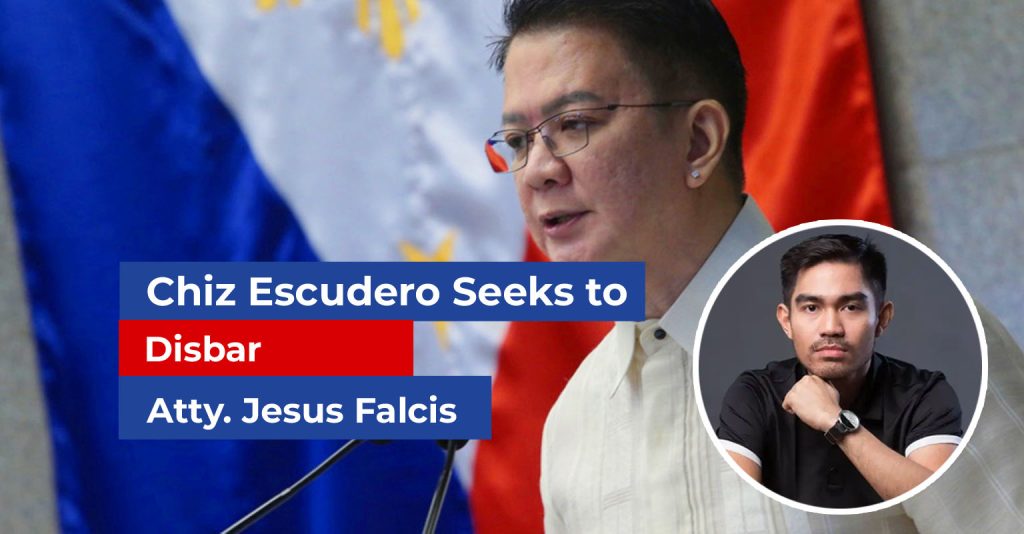
Chiz Escudero Seeks to Disbar Atty. Jesus Falcis: What You Should Know
Senator Francis “Chiz” Escudero has taken a bold legal step: he filed a disbarment complaint against lawyer Jesus Nicardo Madarang Falcis III before the Supreme Court. Here is a clear breakdown of what’s happening and what it means.
What triggered this move?
Escudero claims Falcis has repeatedly published social media posts (mainly on Facebook) between July and September 2025 that are “accusatory, defamatory, demeaning, speculative, hateful, and malicious.”
Among the posts, Falcis allegedly called Escudero “shameless,” “the worst Senate President in history,” and “bulok na keso” (rotten cheese).
Escudero argues these remarks not only harmed his reputation but also tarnish the image of the legal profession.
The legal basis: CPRA
Escudero’s complaint cites violations under the Code of Professional Responsibility and Accountability (CPRA), particularly:
Canon II (Propriety) — Lawyers must act with civility, courtesy, and moral integrity.
Canon III (Fidelity) — Lawyers must uphold respect for the rule of law and avoid making unverified accusations especially via public channels.
Escudero contends that lighter penalties (like warnings or suspension) are insufficient, given Falcis’ prior citations for contempt.
Falcis’ response
Falcis didn’t stay silent. He defended his statements, insisting they are valid criticisms of a public figure. He also argued that Escudero’s publicizing of the disbarment complaint violates confidentiality rules, since such proceedings are supposed to be published only in the Supreme Court’s final decision.
He claimed that if anyone deserves disbarment, it might be Escudero for breaching the rules of procedure himself.
Why this matters
Lawyers are held to higher ethical standards because they serve justice and uphold public trust.
The case raises questions about free speech vs. professional responsibility — especially when claims are made in public forums like social media.
How the Supreme Court handles this will set a precedent: Will it lean toward protecting reputations and professional decorum, or toward ensuring robust public discourse even by lawyers?